
Jung Club Evening Lectures
All are Welcome
- Evening lectures are held at the Essex Church, 112 Palace Gardens Terrace, London W8 4RT. 7pm for 7.30pm. They are also accessible on Zoom, unless otherwise stated.
- Cost: £25. There is no charge for Club Members.
Note: No recording is permitted at our Lectures and Seminars.
Booking and Payments
- Online: Prior booking online is essential to receive the Zoom link via email – click on the Book Now button for individual Events – listed below.
- In-person: Cash or Card payments can be made at the door.
CPD Certificates will be emailed on request.
Note: No recording is permitted at our Lectures and Seminars.
Upcoming Event Listings
The dates given are Thursday evenings unless otherwise noted. They will all be held at the venue and online, again, unless otherwise stated.
Stella von Boch
Speaker/s: Stella von Boch
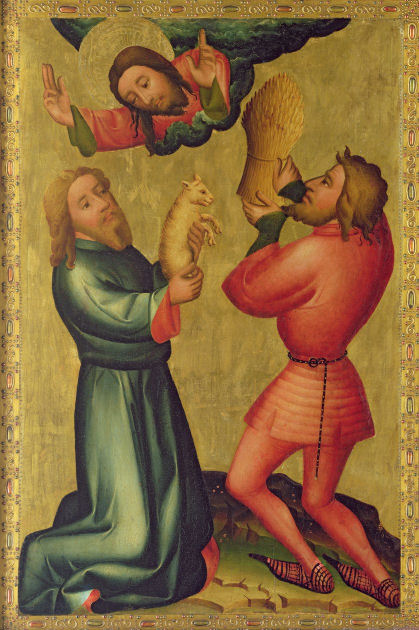
This talk will explore how the theme of the Hostile Brothers emerged between Jung and Freud, immediately before their estrangement. This was observed by Emma Jung, who went on to make the Grimms’ ‘The Two Brothers’ the subject of her thesis. I then move to a consideration of the mythic pairs Castor-Pollux and Cain-Abel, in order to gain a clearer sense of the kinds of duality which the Hostile Brothers entail, before returning to Jung, and to his own encounter and coming to terms with this archetypal dynamic.
About the Speaker/s:
STELLA VON BOCH, PhD is an art historian and a Jungian analyst (IGAP) with a private practice in North London. She is the current Chair of the Jung Club.
Richard Jenkins
Speaker/s: Richard Jenkins
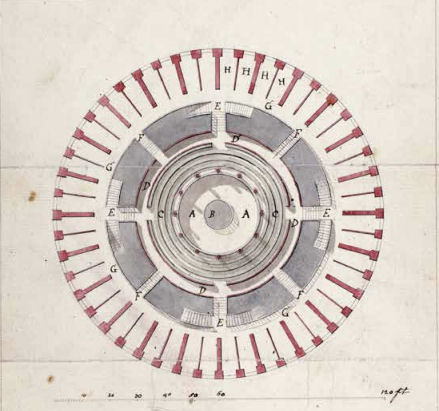
Drawing on The Red Book, the talk explores the paradoxical significance of Jung’s notion of the ‘uniting symbol’ in relation to the healing of the body politic, and the conditions necessary for it to emerge.
Jung warned us “not to be indifferent to the poets, as they “create from the very depths of the collective unconscious, voicing aloud what others only dream” (CW VI, §323). The talk asks what analytical psychology can learn from the struggles of poets from different traditions in the North of Ireland to reach this symbolic depth.
The talk invites parallels between the historical conflict of "hostile brothers" in Northern Ireland and today's society where competing truth claims undermine social trust, limit our capacity to think and fuel cycles of violence.
About the Speaker/s:
Richard Jenkins is a Jungian Analyst, Supervisor, Psychodynamic Psychotherapist, and Training Analyst for the Association of Jungian Analysts (AJA). He teaches at the Bowlby Centre, the SAP, WMIP, and AJA’s Analytic training. Holding degrees in Law, a Master’s in Contemporary Theology, and postgraduate diploma in Psychodynamic Theory, his practice is deeply informed by the intersection of psyche, culture, and meaning.
FRIDAY 6-8pm Online only. This talk is organised by IGAP - the 'book now' link will take you to their website to make your booking. Andreas Schweizer
Speaker/s: Andreas Schweizer
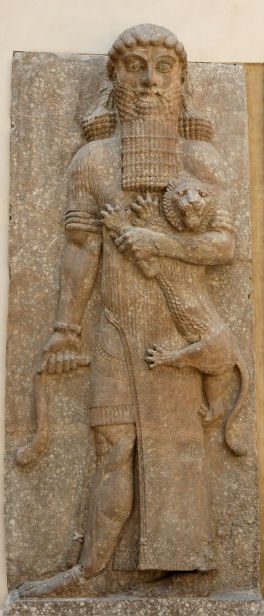
The Epic of Gilgamesh as one of the greatest and oldest masterpieces of world literature has always fascinated Jung. He first mentioned Gilgamesh in his 1911 work Transformation and Symbols of the Libido. He asked himself however “What is the myth I am living?” To answer this question Jung first had to destroy “the hero ideal of [his] efficiency”. His imaginations about the bull-man Izdubar (Gilgamesh), as recorded in The Red Book, culminate in the hero’s transformation into the inner god of the individual. This heralds the dawn of a new god image in the Age of Aquarius.
About the Speaker/s:
Andreas Schweizer, PhD, is a Zurich based Jungian analyst and training analyst, formerly at the C.G. Jung Institute in Küsnacht, currently with ISAP-Zürich. His academic background is in Theology, Comparative Religion as well as Egyptology. Andreas was president of the Psychology Club in Zurich for 18 years and president of the Eranos Conference in Ascona for 14 years. He has published numerous essays and books, including The Sungod’s Journey through the Netherworld, 2010; and C.G. Jung, Letters to Hedy Wyss (1936–1956) 2023.
Followed by our winter party with drinks and nibbles told by the storyteller Jo Blake
Speaker/s: told by the storyteller Jo Blake
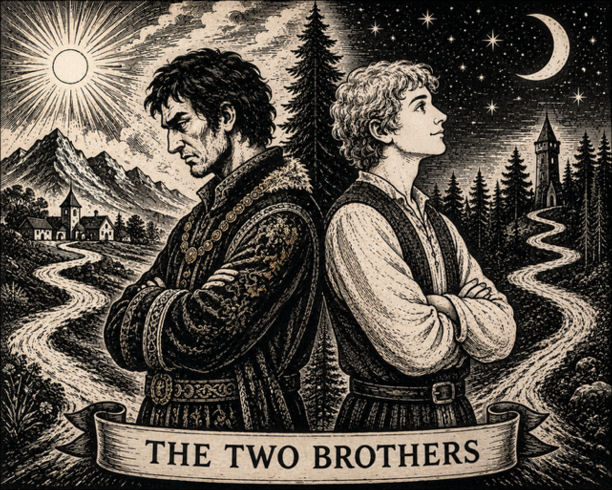
The Two Brothers holds a particular significance for analytical psychology. It was chosen by Emma Jung in 1913/14 as subject of the thesis which granted her formal membership in the newly founded Association of Analytical Psychology. Emma was a witness of the rift between Freud and Jung which led to the split in the psychoanalytic movement. In Freud’s letter to Jung of 13. X. 1911, Freud expanded on the motif of the brothers, expressing a particular interest in the "weaker brother”, and drawing an analogy to the placenta. But it was Emma who first gave the subject proper attention. In Jo Blake’s retelling of this epic adventure, we will follow the twists and turns of sibling rivalry, love, loyalty and deadly misunderstandings, with a host of animal companions!
About the Speaker/s:
Jo Blake is a contemporary storyteller who works across dance, theatre and therapeutic settings. She has a PhD in Emergent Storytelling Practice from the University of Chichester, and an MA in Dance Theatre from Trinity Laban. She is co-founder of the Anima Mundi School of Storytelling, and founder of contemporary storytelling training course, Body, Breath and Story. Her most recent project, HERESY, is a multi-stranded art piece inspired by the Gospel of Mary Magdalene. Jo also works for The Reader, running regular shared reading groups for prisoners and ex-offenders in the Midlands.
Laurence Hillman

Speaker/s: Laurence Hillman
The motif of the hostile brothers lies at the heart of Jung's exploration of opposites. This lecture approaches that theme through the lens of archetypal astrology, asking how the birth chart reveals the particular tensions each psyche is called to carry over a lifetime.
Drawing on Jung's psychology of opposites, James Hillman's polytheistic psychology, and Laurence Hillman's concept of the astrological agon—the living tension between archetypal principles through which consciousness develops—the presentation explores what happens when one archetypal principle attempts to exclude another from conscious participation. Hostile brothers emerge whenever we identify exclusively with one archetypal principle and deny the legitimacy of its counterpart.
Rather than viewing the birth chart as a collection of separate symbols, archetypal astrology understands it as a living ecology of relationships. It offers a distinctive perspective on individuation by illuminating the particular archetypal tensions each person is called to carry and the creative dialogue through which the split psyche gradually becomes whole.
About the Speaker/s:
Born and raised in Zürich, Dr. Hillman became immersed in archetypes at an early age. He transferred his passion to his current roles as archetypal coach, consultant and astrologer. Now based in St Louis, Missouri, he is the author of several books on archetypal astrology. Dr. Hillman holds a PhD in psychology with a focus on Transformative Leadership, an MBA, an MCM (Masters in Construction Management), as well as a degree in Architecture. He is co-creator of Archetypes at Work
Robert Macdonald
Speaker/s: Robert Macdonald
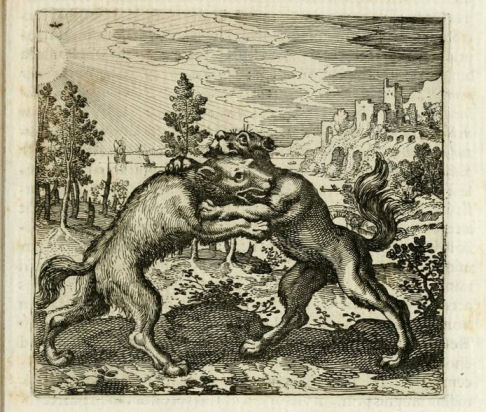
The hostile brother’s theme runs as a leitmotif through Shakespeare’s complete works, described in Hamlet as the "primal eldest curse." This enduring rivalry will be examined as an outward manifestation of an inner division: a psychological tension between opposites whose constellation and confrontation are essential to the process of individuation. The alchemical drama of the two sons provides a symbolic framework for this inner conflict, where what descends from above and what arises from below must meet in the creation of the ‘whole’ man. This process becomes significant in the late plays, where Shakespeare’s dramatic imagination turns toward the prospect of reconciliation and the inner work required.
About the Speaker/s:
Robert Macdonald is a Senior Analyst with the Independent Group of Analytical Psychologists. He works in private practice from his home in Queen’s Park. Prior to Analytic training he was Head of Voice at a London drama school and worked at professional theatres throughout the world. For further information see my website.
Paul Bishop
Speaker/s: Paul Bishop
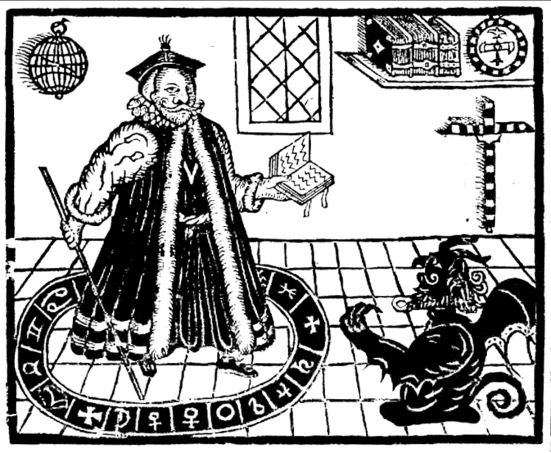
The recently published Jung’s Life and Work confirms the importance attached by Jung to Goethe when it records that “Goethe’s secret was that he was an alchemist” and that he “understood his life as an opus magnum, or divinum,” adding: “So he is correct in saying that Faust was his ‘principal work’ [Hauptgeschäft] and hence, that his life is defined by Faust” (pp. 47-48). (The centrality of Faust to Goethe’s trajectory as a human being and an a poet has been emphasized by A.N. Wilson’s recent biography of Goethe, subtitled “His Faustian Life.”) By examining how Faust was, “in a spectacular way,” Goethe’s “living substance, vitally alive and active,” we shall explore the implications of this vitality for our understanding of the motif of the hostile brothers.
About the Speaker/s:
Paul Bishop is Honorary Professorial Research Fellow and former William Jacks Chair of Modern Languages at the University of Glasgow. His research is focused on the intellectual background to psychoanalysis and analytical psychology. His current project, Jung and the Epic of Transformation (4 vols, Chiron), draws on his experience over three decades of researching, teaching, and enjoying Jung’s works and their intellectual sources.
Hostile Brothers lecture series Katerina Sarafidou
Speaker/s: Katerina Sarafidou
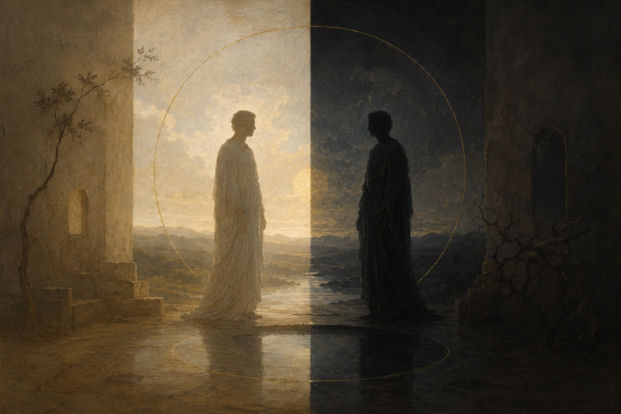
In his work, Jung treats the motif of the hostile brothers as an archetypal pattern that expresses psychic opposites and the paradoxical nature of the Self. His psychology seeks wholeness rather than goodness, recognising that the tension of opposites cannot be resolved through identification with one side at the expense of the other. Drawing on Jung’s Red Book and Black Books, this lecture explores the experiential, ethical and "all too human" implications of the hostile brothers within the individual and collective psyche. It examines individuation as an ethical task requiring the capacity to bear complexity, shadow, and inner conflict, and considers the implications of this perspective for the analytic relationship and the analytic attitude.
About the Speaker/s:
Katerina Sarafidou is the Head of Research of the MSc Psychodynamics of Human Development run by Birkbeck College and the British Psychotherapy Foundation. She is an honorary member of the British Jungian Analytic Association and one of the three founders of The Circle of Analytical Psychology, which offers a 2-year course of study on Jung’s Liber Novus.
Gail Bennett
Diane Finiello Zervas
George Bright
Past Event Listings
The events shown below are previous events held by the club over the last year. They are for reference only and cannot be booked.
Katerina Sarafidou
Speaker/s: Katerina Sarafidou
The VII Sermons to the Dead as the cornerstone of Jung's individuation process: An introduction to the text and its meaning in the context of the Red Book and Black Books.
The VII Sermons to the Dead appears in the closing chapters of the Red Book and presents a cosmological framework that underpins the entire undertaking of Jung’s Liber Novus. It provides the foundation of Jung’s notion of individuation and reveals the full nature and purpose of the individuation process. It is the formulation of Jung’s own myth which he set out to discover when he embarked on his experimentation with the inner figures in 1913, and then documented in his Black Book diaries. This lecture will give an introduction to the text of the VII Sermons in the context of the Red Book and Black Books, it will explain its role in individuation, and its implications for the work of analytical psychology.
About the Speaker/s:
Katerina Sarafidou is the Head of Research and former Director of the MSc Psychodynamics of Human Development run by Birkbeck College and the British Psychotherapy Foundation. She is an honorary member of the British Jungian Analytic Association and one of three founders of The Circle of Analytical Psychology, which offers a 2-year course on Jung’s Liber Novus..
This is a 2 part lecture Lance Owen
Speaker/s: Lance Owen
Lecture Part 1: Gnostic Vision and Hermeneutics
We will briefly introduce the rediscovered Gnostic texts, examine their historical origins, and discuss Jung’s early encounters with this ancient material. As Jung stated, “The Gnostics were concerned with the problem of archetypes. They made a peculiar philosophy of it, as everybody makes a peculiar philosophy of it when he comes across it naïvely and doesn't know that the archetypes are structural elements of the unconscious psyche.”
We will engage a psychologically informed consideration of Gnosticism in terms of its primary experiential roots, and then consider how a “hermeneutics of archetypal vision” was foundational to the Gnosis, to Jung’s understanding of Gnostic tradition, and to the roots of his Septem Sermones ad Mortuos.
About the Speaker/s:
Lance S. Owens is a physician, historian, and scholar with focus on Jung, Gnosticism, and the Western visionary traditions. Since 1995 he has been the editor and compiler of the major internet resource archiving of ancient Gnostic scriptures, The Gnosis Archive, gnosis.org. Many of his publications are available online at academia.edu.
This is a 2 part lecture Lance Owen
Speaker/s: Lance Owen
Lecture Part 2: Jung and the Father of the Prophets
Above Philemon’s image painted on folio page 154 of Liber Novus Jung penned an appellation in Greek: “Father of the Prophets, Beloved PHILEMON”; on the mural of Philemon at the Bollingen Tower, he restated the appellation: “PHILEMON the prophets’ forefather".
In this lecture we will examine in detail Jung's encounter with Gnostic mythology during the period leading up to composition of the Septem Sermones ad Mortuos in February 1916. Was there a connection between Jung’s vision of Gnosis and what historians now understand as Gnostic tradition? And who, or what, is the “Father of the Prophets”? How is he connected to Philemon, Simon Magnus and the Septem Sermones?
About the Speaker/s:
Lance S. Owens is a physician, historian, and scholar with focus on Jung, Gnosticism, and the Western visionary traditions. Since 1995 he has been the editor and compiler of the major internet resource archiving of ancient Gnostic scriptures, The Gnosis Archive, gnosis.org. Many of his publications are available online at academia.edu.
18:30 - 20:30 ONLINE ONLY Andreas Schweizer
Speaker/s: Andreas Schweizer
This talk is organised by IGAP - to book though them, please use the booking link below.
About the Speaker/s:
Further details about the speaker will appear here shortly.
Please see below for details of the readers.
Speaker/s: Please see below for details of the readers.
The Seven Sermons to the Dead was written by C. G. Jung in the context of his experimentation with the unconscious, leading to The Black Books and subsequently to the creation of Liber Novus (The Red Book). The text of this dramatic reading is recorded in the third book of Liber Novus, following Liber Primus and Liber Secundus, called Scrutinies.
The Sermons weave together two themes which had emerged separately for Jung: a cosmological vision revealed to him by his soul on 16th January 1916; and repeated encounters with the Dead which culminated in a parapsychological event at his house in Küsnacht. The Dead needed acceptance and salvation. The response was a seven part education of the Dead by Jung’s inner teacher Philemon, in which the path of individuation is introduced to them.
Our year of focus on The Seven Sermons would be incomplete without an immersive experience of the Sermons as spoken word. We believe that speaking the text out loud while listening together in a group, will bring the material to life in a way that cannot be achieved by silent reading. For Jung himself, this was a matter of lived experience.
Tonight’s readers are:
Philemon: Robert Macdonald (Jungian Analyst, IGAP)
C. G. Jung: Max Noak (Jungian Analyst, SAP, Harvest Editor )
Soul: Heba Zaphiriou-Zarifi (Jungian Analyst, GAP)
The Dead:
Gail Bennett (Jungian Analyst, GAP, Harvest Editor, Club Vice Chair);
Stephan von Bismarck (Club Treasurer)
Stella von Boch (Jungian Analyst, IGAP, Club Chair)
Violin: Eulalie Charland
About the Speaker/s:
Violinist Eulalie Charland has lived a life of perpetual motion—daughter of a diplomat, she collected countries like souvenirs before finally dropping anchor in London. Her violin has graced stages from Radio France in Paris to the Cheltenham Festival, earning praise from The Strad for playing that is “elegant … strong and possessing uncomplicated projection”. But Eulalie’s true fascination lies in weaving together the seemingly disparate—in this case, contemporary women composers and C. G. Jung’s spiritual teachings. After two decades as a professional violinist, she pivoted into Integral Coaching, discovering that the same skills that made her a compelling musician could help others transform their lives.
In this project, she performs solo violin excerpts from Missy Mazzoli’s “Dissolve, O My Heart”, Odaline de la Martinez’s “Improvisations for Solo Violin”, and Jessie Montgomery’s “Rhapsody No.1 for Solo Violin".
Angeliki Yiassemides
Speaker/s: Angeliki Yiassemides
I will present my thesis that Septem Sermones ad Mortuos was the initial ground for the development of Jung’s time theory, making it a key text in his opus. In this poetic piece Jung dealt with concepts that are within time and are defined by it, as well as by its absence. This is the first instance that time as well as timelessness are interwoven in a wider context; the temporal parameters of both the cosmic and the individual levels are interrelated. Crucially, timelessness is not a quality belonging solely to the personal unconscious, but is conceptualized in terms of the entire universe. In Septem Sermones we encounter collective as well as individual structures that are within and beyond time.
About the Speaker/s:
Angeliki Yiassemides is a certified Jungian analyst (IAAP). She is a developmental psychologist (Columbia University) and holds a PhD in Psychoanalytic Studies with a focus on Analytical Psychology (University of Essex). Temporality in the theory of C.G. Jung has been one of her main academic and clinical research interests. She is in private practice, and lives in Cyprus.
*POSTPONED* Liz Greene
Speaker/s: Liz Greene
We regret that this talk by Liz Greene has to be postponed. We will let you know when a new date has been found. With apologies, C. G. Jung Club
About the Speaker/s:
James Harpur
Speaker/s: James Harpur
In Jung’s VII Sermons Philemon addresses the questions the ‘dead’ cannot find their answers to in Jerusalem. That the dead can have a rapport with the living is also a feature of my own poetry, and in this illustrated talk I will explore through my sequence The Gospel of Gargoyle (Eblana Press, 2025) how, to quote WH Auden, ‘we are lived by powers we pretend to understand’. In Gargoyle, a poet figure flies in dreams to the roof of Notre-Dame and encounters an animate Gargoyle, as well as, at one point, the ghost of Blaise Pascal. Like the Sermons, the poem employs ‘active imagination’ and interlaces poetic and philosophical explorations with dramatic tension.
About the Speaker/s:
James Harpur has published ten books of poetry and won a number of awards, including the National Poetry Competition. He is a Visiting Research Fellow at Trinity College Dublin’s Centre for Medieval and Renaissance Studies and a Fellow of the Temenos Academy. His latest non-fiction is Dazzling Darkness: The Lives and Afterlives of the Christian Mystics (Hurst, 2025).
Katerina Sarafidou
Speaker/s: Katerina Sarafidou
About the Speaker/s:
Jim Fitzgerald
Speaker/s: Jim Fitzgerald
There is a god about whom you know nothing
Central to the whole enterprise which we know as The Red Book is the creation of a new cosmology. It is in the text that Jung called The Seven Sermons to the Dead that this new vision of the microcosm and macrocosm is fully stated. The revelation of this forgotten god is deeply challenging as it contradicts the familiar certainties of the Judeo-Christion deity. It certainly challenged the Dead- the ancestral collective who had demanded enlightenment- as, on hearing about this new being, Here the dead howled and raved greatly, for they were still incomplete ones. Some effort will be made to understand this powerful, contradictory entity, although his essence lies in the realm of the non-rational. At the same time as Jung wrote The Seven Sermons, he painted a mandala and found a place for Abraxas at the nadir of the circle, labelling him dominus mundi, lord of the world!
About the Speaker/s:
Jim Fitzgerald (M.A. in Ancient Classics) was born and raised in a small village in rural Ireland. His academic background is in Ancient Classics and Byzantine Greek. After a career as a Primary school teacher in London, he trained as an analyst at the C. G. Jung Institute in Zurich. He is a past chairman of The C. G. Jung Analytical Psychology Club, London and a founding member and past chairman of The Guild of Analytical Psychologists. He is also a Senior Member of The Independent Group of Analytical Psychologists. He has a private practice in London and has lectured widely. Six of his talks have been published as pamphlets by the Guild of Pastoral Psychology.
Diane Finiello Zervas
Speaker/s: Diane Finiello Zervas
Beginning with Jung’s early interest in cosmological systems and images, this lecture will explore the series of sketches, paintings and sculptures of the new cosmology, man’s place within it, and the new god image that Jung made in Black Book 5, his agendas, the Red Book and other related visual images. Taken as a whole, they form an integral part of his ongoing engagement with the unconscious and his individuation process between 1913 and 1928.
About the Speaker/s:
Diane Finiello Zervas PhD is an art historian and a senior analyst with IGAP. She has written ‘Intimations of the Self’: Jung’s Mandala Sketches, 1917’ for The Art of C. G. Jung (W. W. Norton & Company, 2019). Her book ‘Enchanting the Unconscious’: Jung’s Reception in Great Britain, The Red Book, and his English Seminars, 1919 and 1920 was published by Routledge in May 2025.
George Bright
Speaker/s: George Bright
Philemon first appears in the text of Liber Novus as a retired magician who instructs Jung about the craft of magic. He re-appears at the conclusion of the work in a dialogue with Jesus Christ. All other appearances of Philemon in Liber Novus (for example, Philemon as the preacher of the VII Sermons) are editorial additions made by Jung in late 1917.
What happened in 1917 that caused Jung to insert the figure of Philemon more widely into Scrutinies?
Access to Black Book 7 enables us to trace the re-emergence of Philemon in Jung’s active imaginations from 1917 to 1928. My aim in this talk is to address the question: who is Philemon and why does he matter?
About the Speaker/s:
George Bright is a supervising analyst of The Society of Analytical Psychology and a member of the Chicago Society of Jungian Analysts. He is one of the founders of The Circle of Analytical Psychology which offers two-year close readings of Liber Novus and of Jung’s Black Books. He works in private practice in West London.